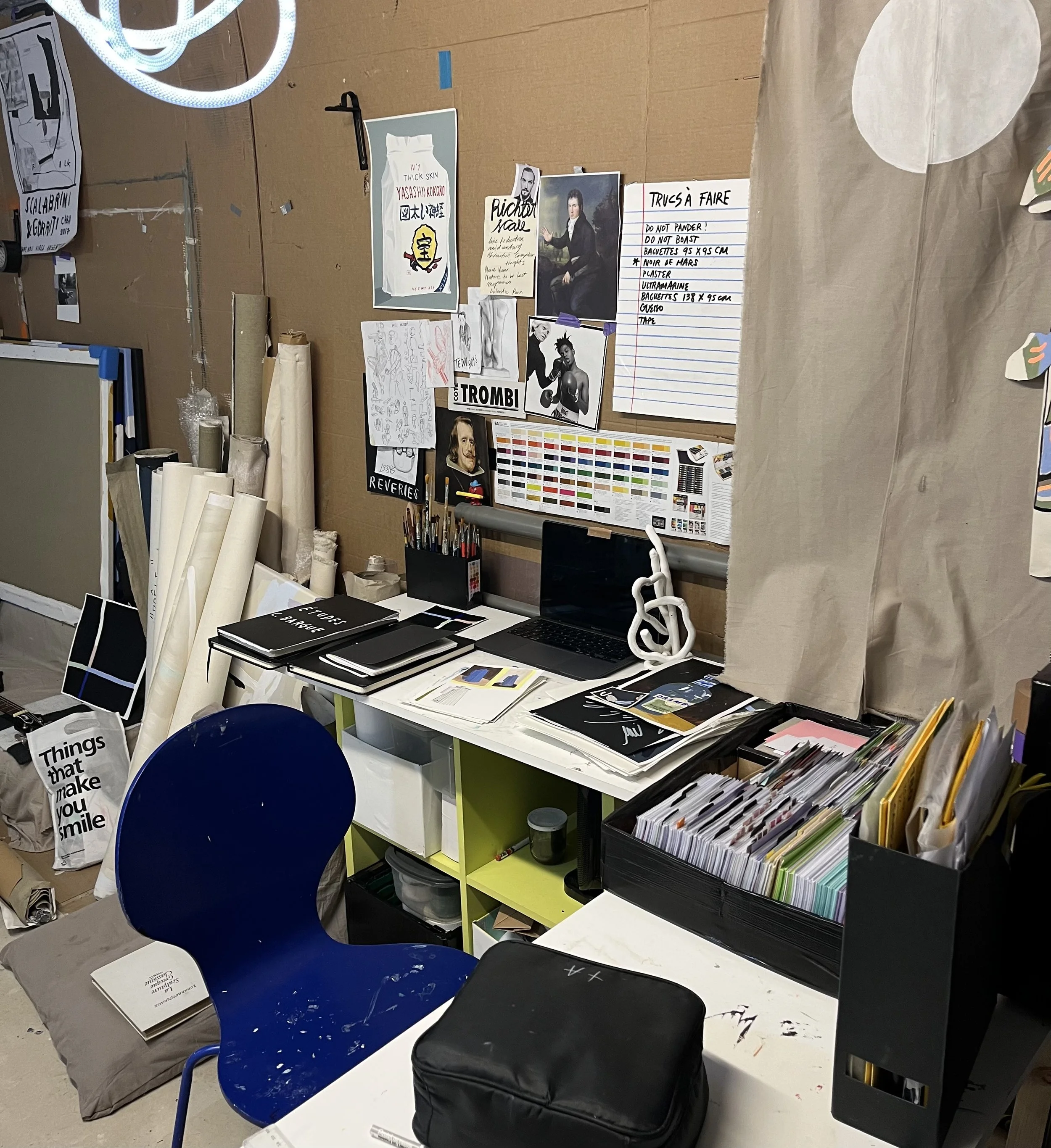
STUDIO PRACTICE
The studio operates as an independent, sustained practice dedicated to the development of long-term bodies of work. All work is produced within a private studio environment where process, material experimentation, and documentation remain central to the artist’s methodology.
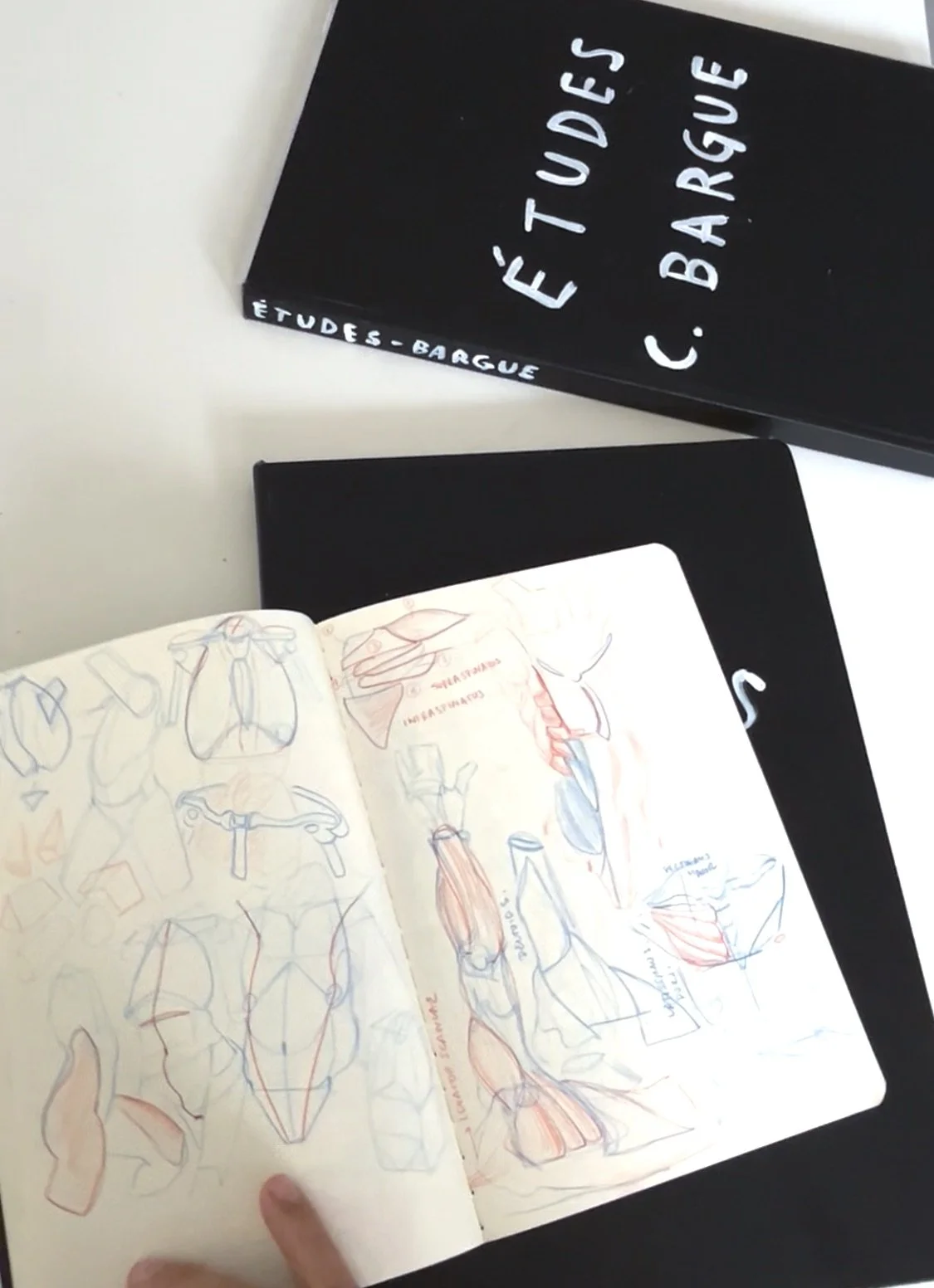
For the past five years, the artist has maintained a full-time, self-directed studio program focused on technical refinement, material discipline, and conceptual continuity. This ongoing study encompasses foundational artistic disciplines including anatomy, color theory, figure construction, and material research across mediums such as acrylic, gouache, oil, and resin.
These mediums are often used in dialogue with one another while remaining intentionally limited to the artist’s restrained, minimalist palette.
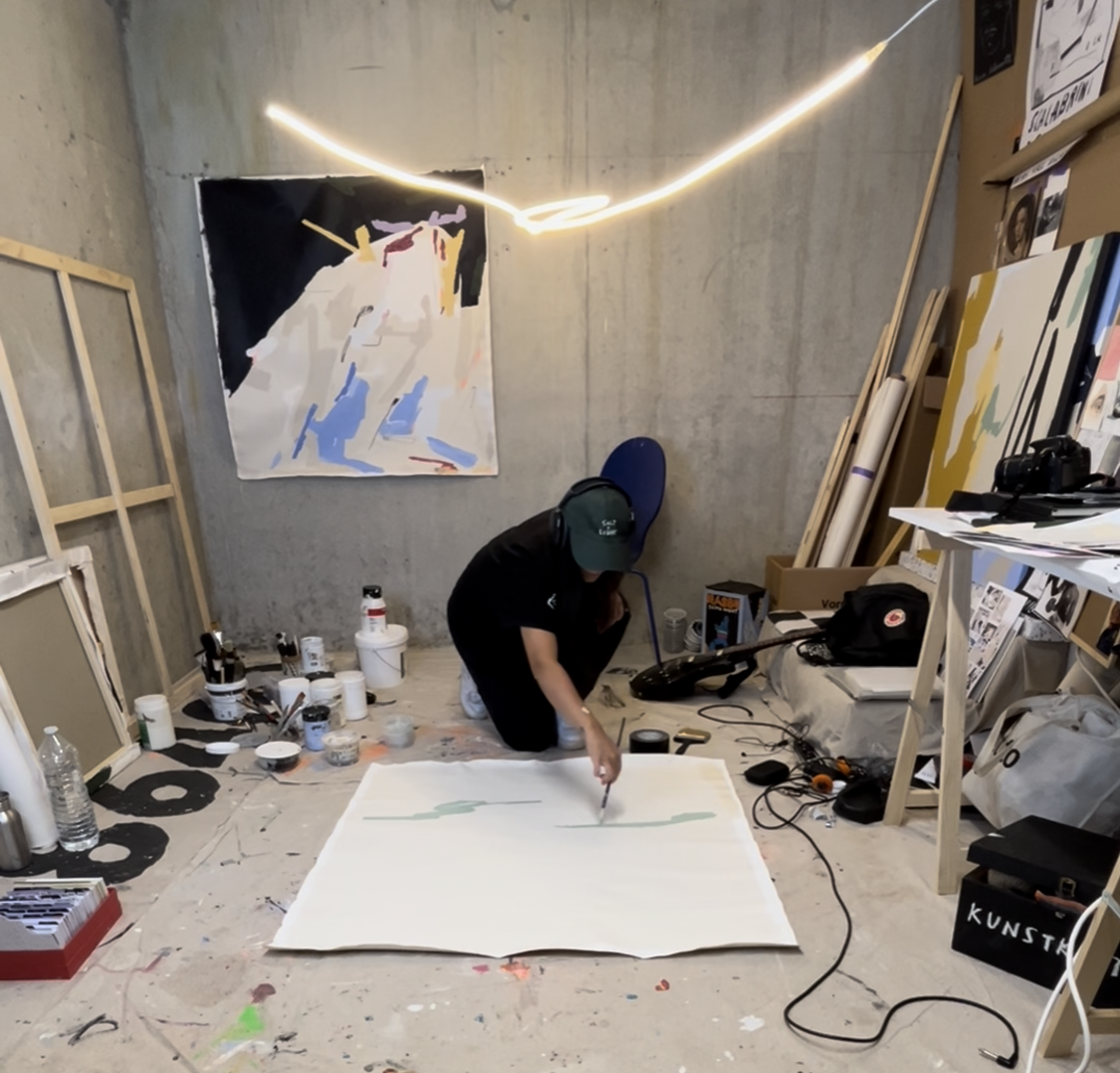
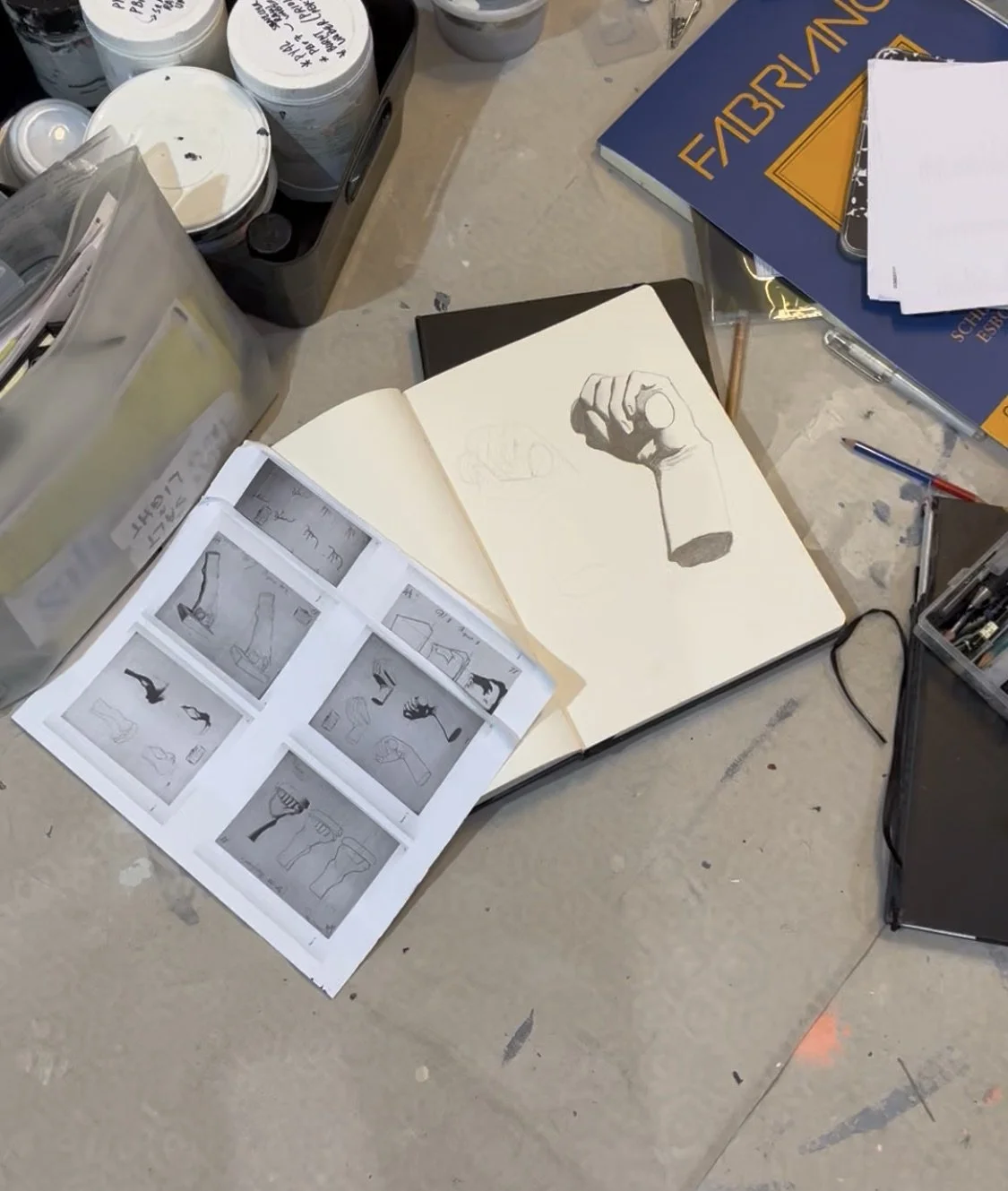
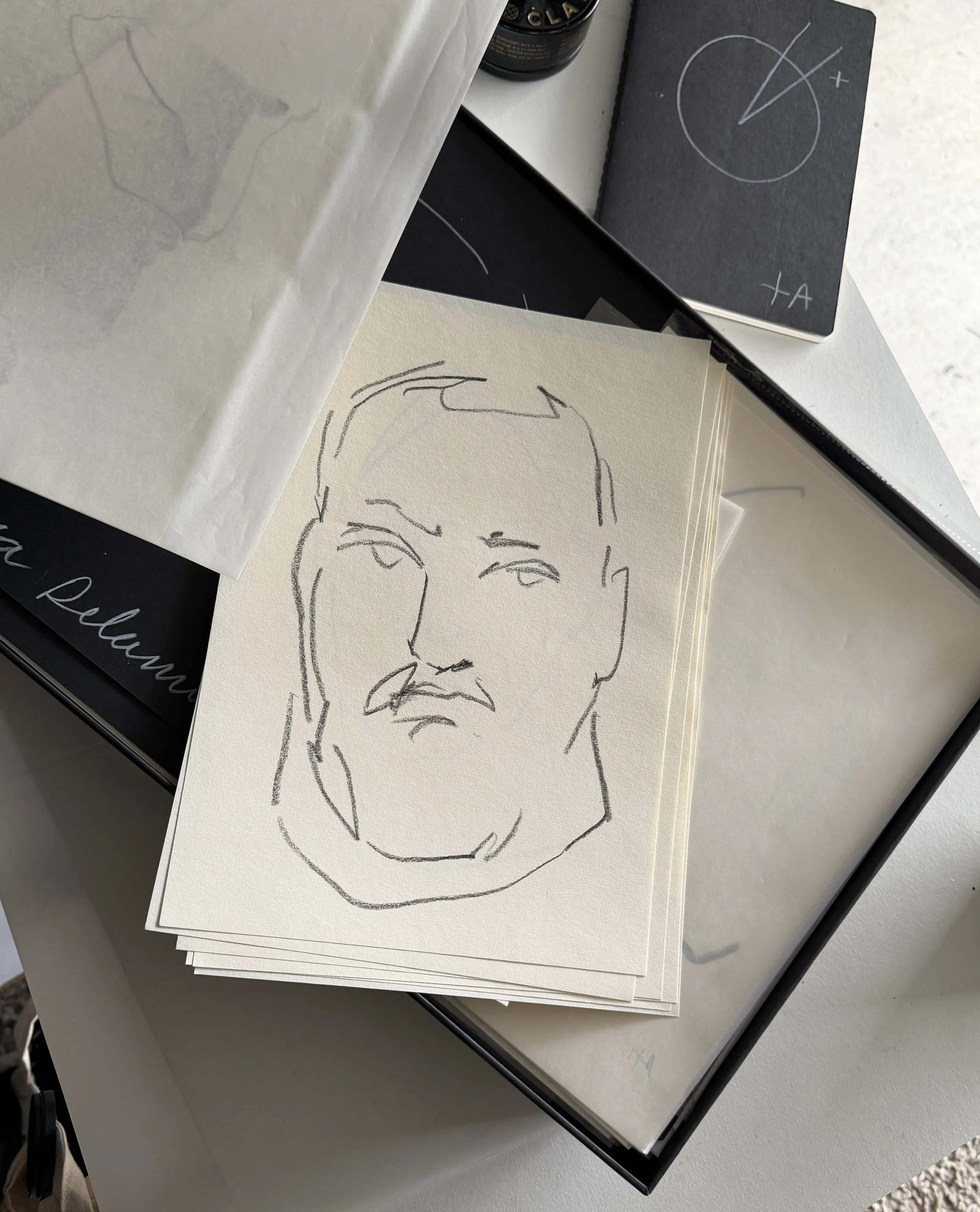
At the core of Aura’s practice is a daily studio discipline centered around the production of small-scale works known as reveries. These intuitive studies function both as a research method and as a space for experimentation, allowing the artist to refine composition, gesture, and mark-making through a process of sustained repetition and reflection.
Though modest in scale, each reverie serves as a precursor to larger and more complex compositions. Within these condensed works, the artist develops fragments of the emotional and visual vocabulary that later emerges in larger paintings.
Rather than functioning as simple preparatory sketches, reveries operate as complete works that actively shape the direction of the broader practice.
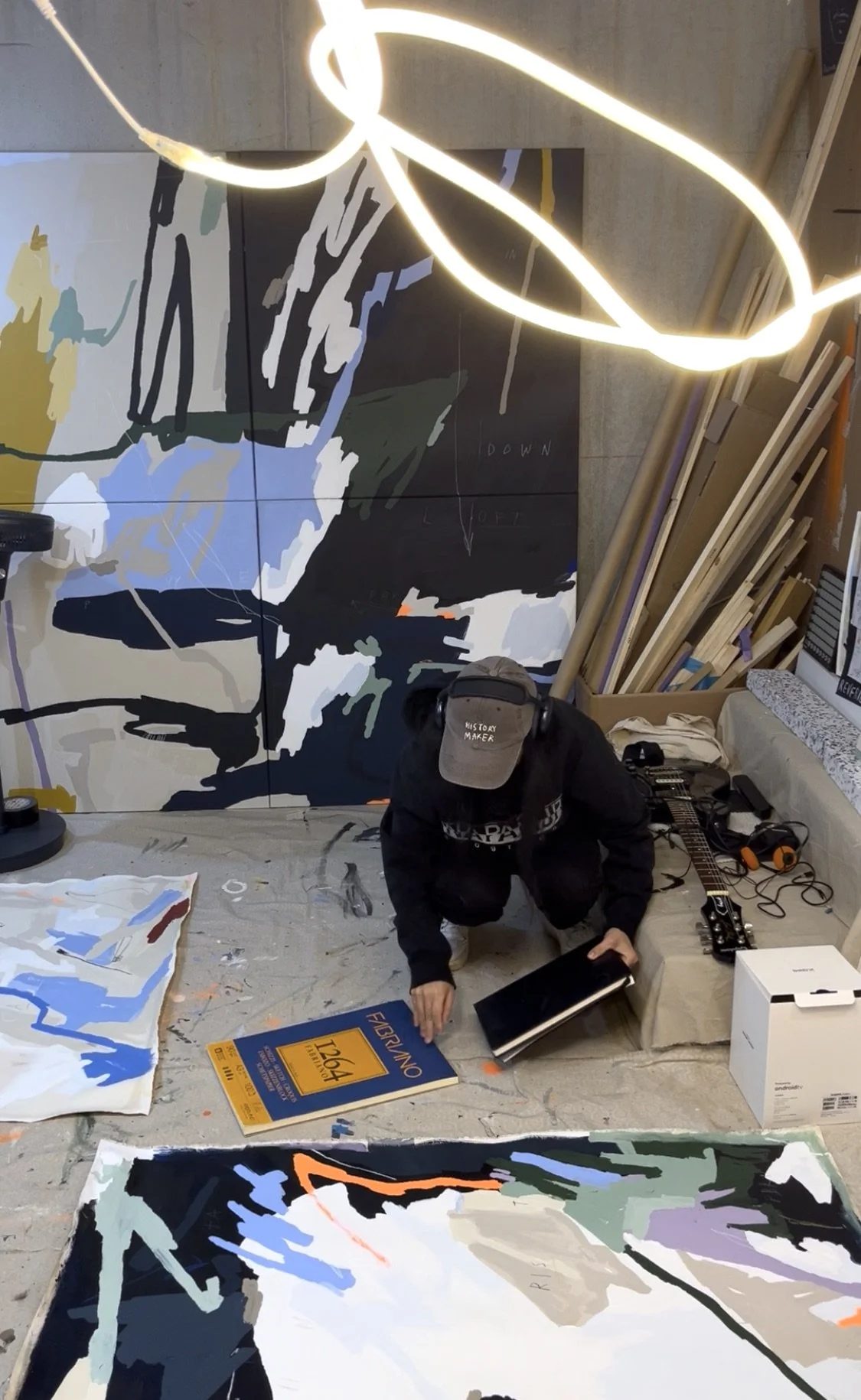
This relationship establishes a clear dialogue between small and large-scale works, revealing the intentional continuity that underlies the artist’s process. Through this ongoing cycle of experimentation and expansion, ideas are tested, refined, and ultimately translated into more ambitious compositions.
The reveries also operate as an ongoing investigation into the artist’s evolving visual language. Within these works, symbolic structure are continuously broken down and reassembled, allowing the creative process to unfold without the constraints of a final resolved piece. This open-ended research informs the larger works, contributing to their emotional depth and conceptual cohesion.
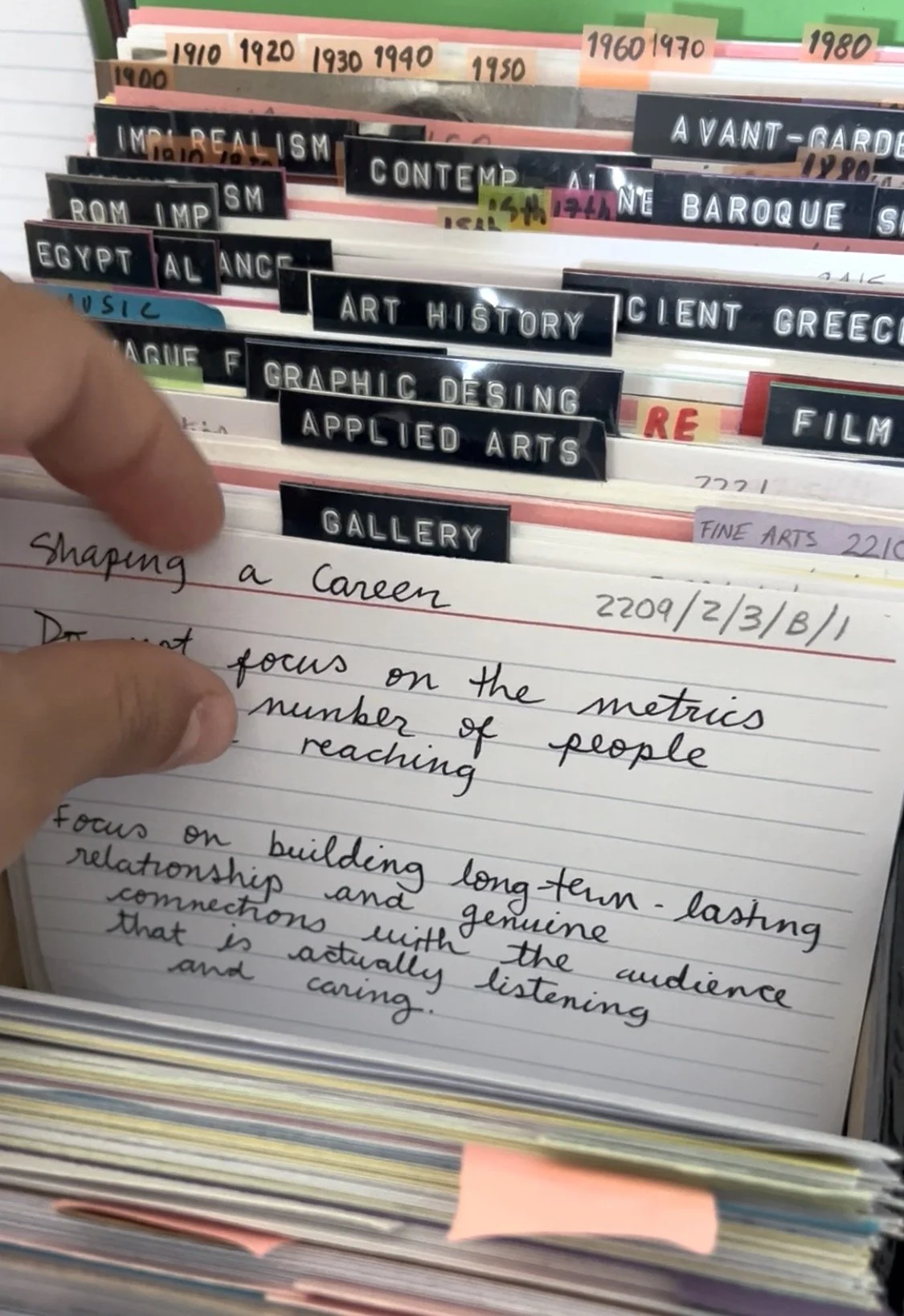
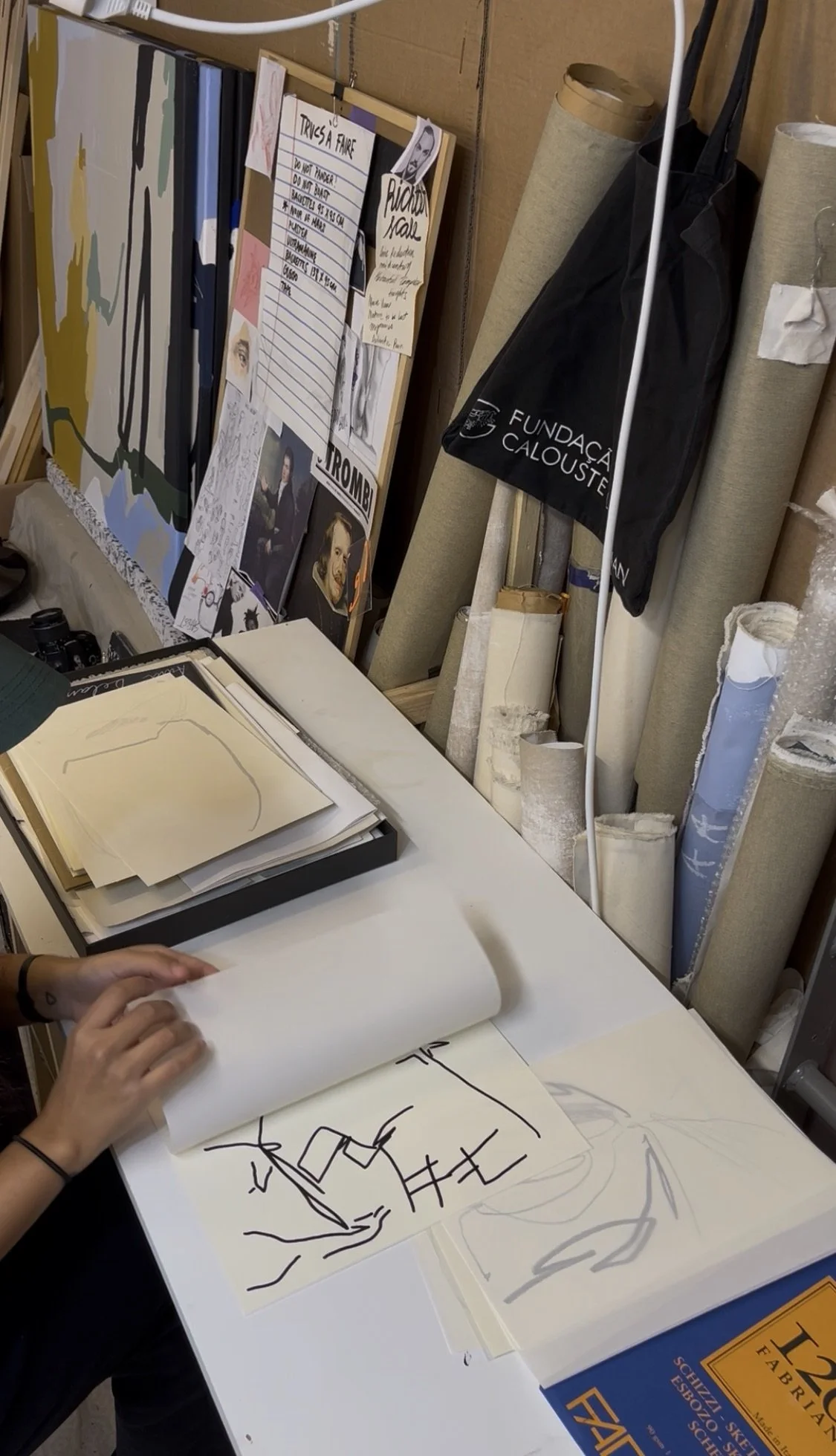
In parallel with daily reveries, the artist has also developed a structured method for studying art history, visual culture, and stylistic movements through the use of an analog Zettelkasten note-taking system.
This practice involves the continuous writing and linking of small conceptual notes, creating an evolving network of ideas that bridges research and artistic execution. By externalizing knowledge and organizing it within a living archive of interconnected thoughts, the artist maintains an ongoing dialogue between study and making. This system fosters a productive friction between reflection and creation.
Materials
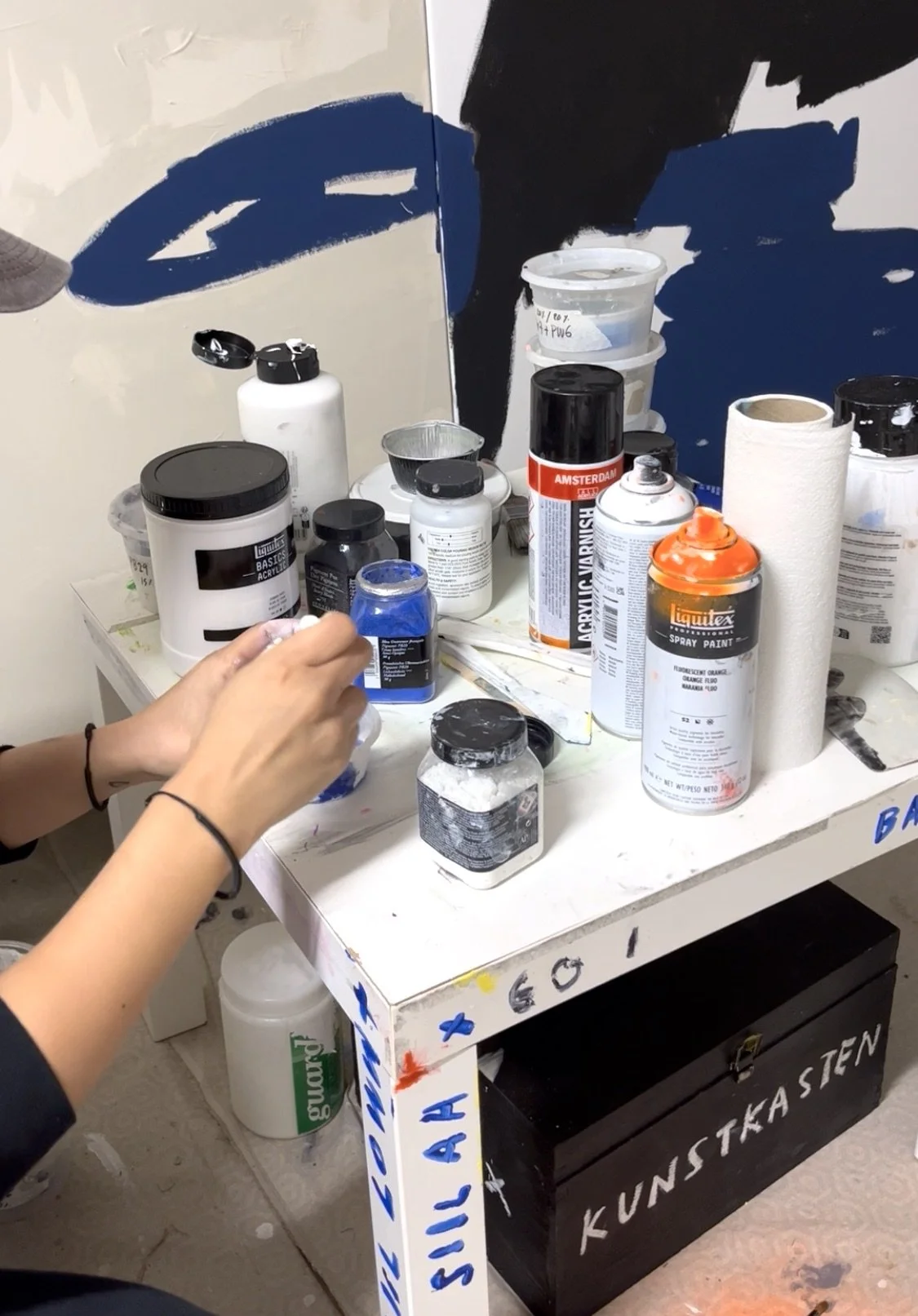
The artist works with acrylic in large-scale paintings on unstretched cotton and linen canvas for its immediacy and responsive handling, while smaller works are developed on artist-grade paper. Across both formats, the artist extends a consistent symbolic language through the use of graphite, oil-wax pastels, oil pastels, and colored pencils. These drawing materials are layered and integrated into the painted surfaces, allowing gestures, symbols, and fragments of form to emerge through a hybrid process that bridges painting and drawing.
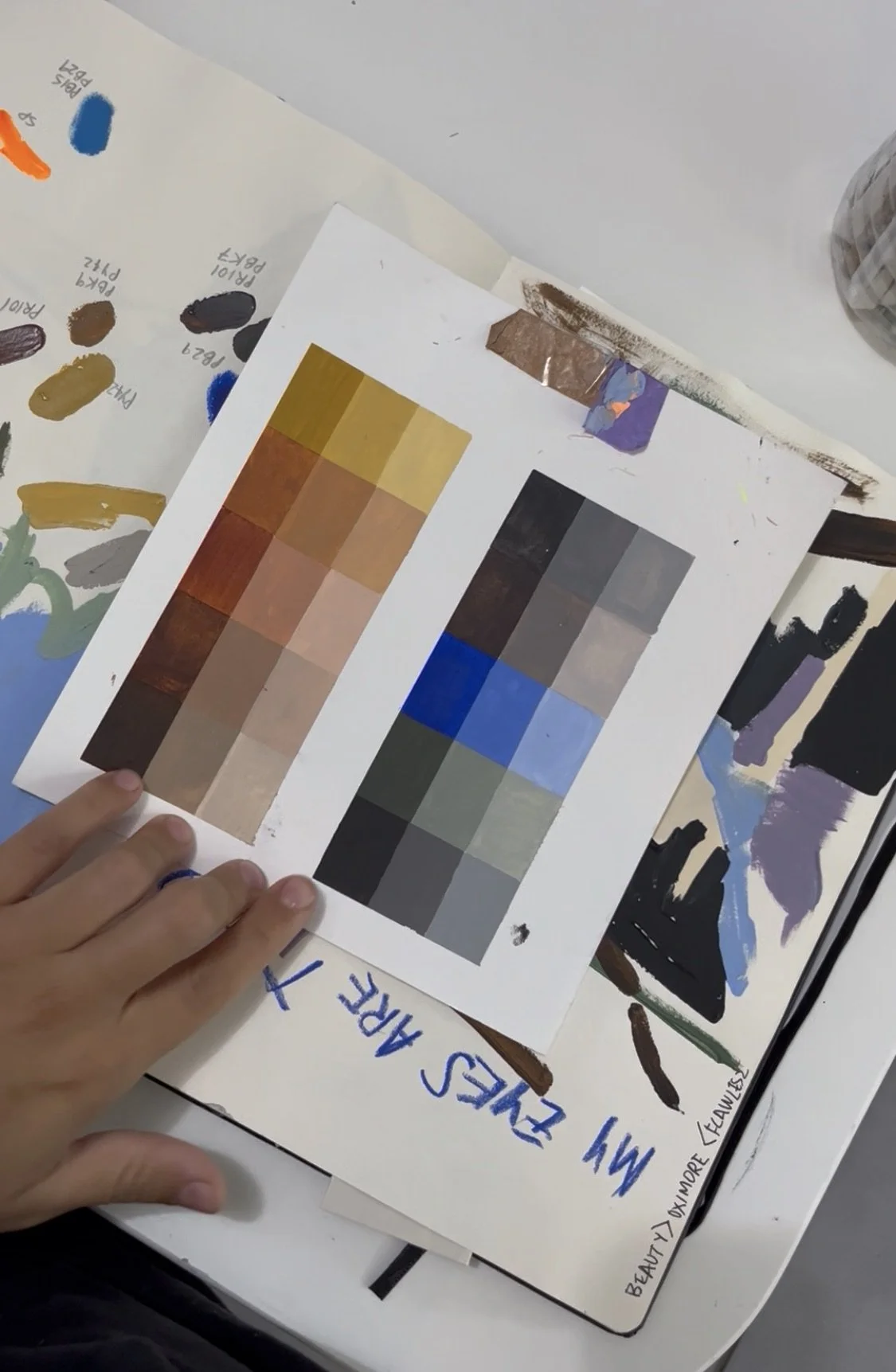
The palette is intentionally restrained, drawing from a classical range of earth pigments (ultramarine blue, raw and burnt umber, raw and burnt sienna, yellow ochre, black, and white) occasionally disrupted by a single modern chromatic intrusion.
The artist develops compositional studies primarily through small-scale oil paintings. These works are produced in oil on paper as well as on unstretched cotton and linen canvas. Working at an intimate scale supports an expressive handling of the medium.
Alongside painting, the artist maintains an ongoing exploration of sculpture, textile works, and writing. The creative process also extends into music that forms a part of the studio environment.
Method
Surfaces are developed through successive layers of mark-making, allowing forms to emerge through accumulation, interruption, and revision.
The process begins with the preparation of the canvas. Conceptual starting points often originate from the artist’s written notes and reveries, recorded in sketchbooks or in her Zettelkasten system where keywords, short phrases and small compositions act as catalysts for the beginning of the artwork.
The first brushstroke is typically gestural, responding intuitively to the central idea drawn from these notes. From this initial mark, the composition evolve through blocks of tonal structure. In low-key works, contrast and density are emphasized, while high-key compositions explore continuity and subtle rhythmic progression.
Language then appears as fragmented symbolism. Drawing materials are introduced to interrupt and rework the painted surface, fracturing and reconnecting forms. Throughout the process, the brushstroke remains central, grounding the composition in an expressive, abstract language.
Archival & Documentation
Each artwork is:
Catalogued with a unique studio Identification Number
Digitally archived with a Copyright Registration Number
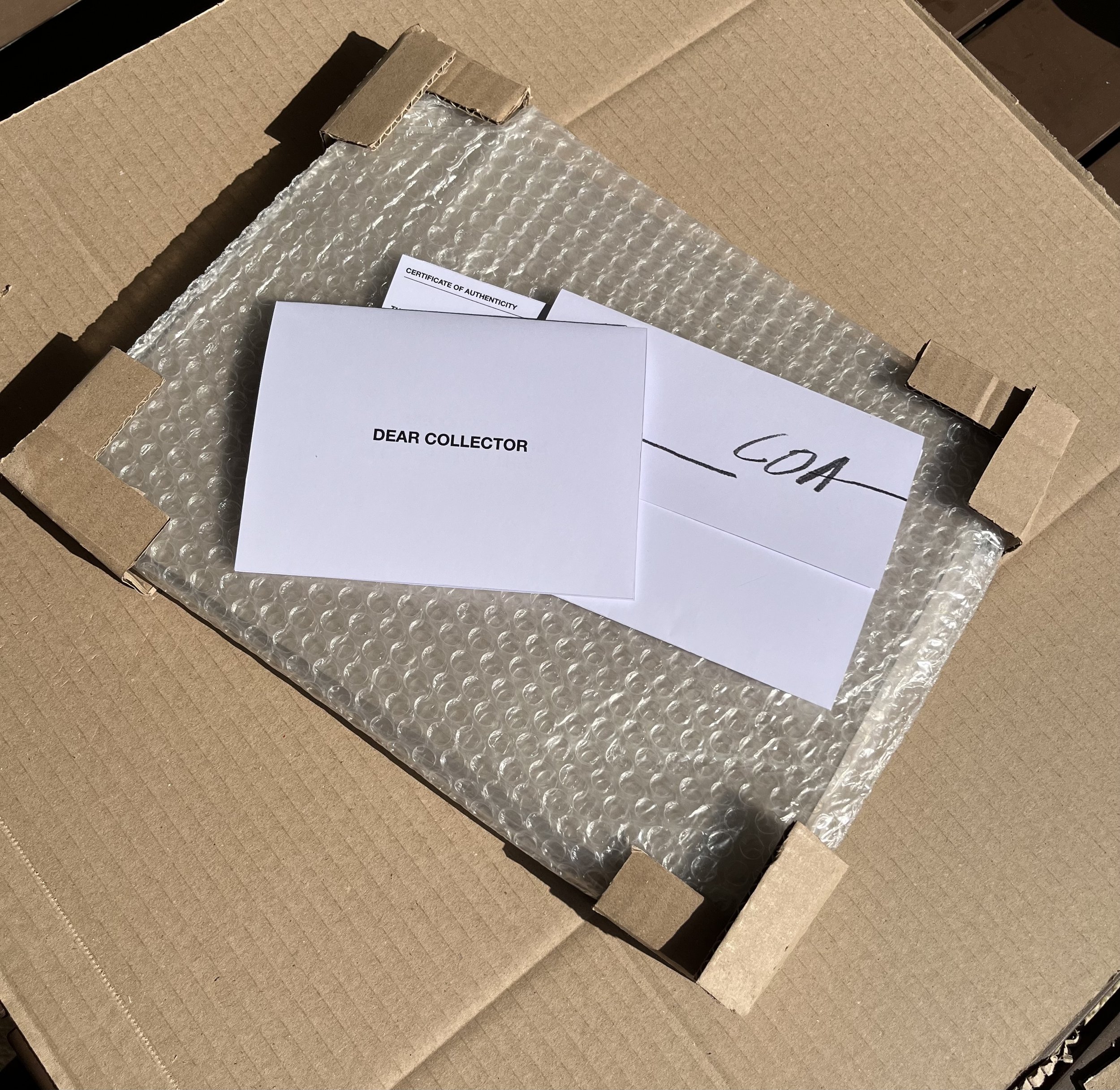
Accompanied by a signed Certificate of Authenticity
Stored with archival materials (glassine or acid-free paper); paintings often kept rolled
Provenance & Availability
Some works can be acquired directly from the studio.
No prints or reproductions are produced.
Select works are reserved for exhibition and long-term collection development.
Shipping & Handling
Original works shipped flat in archival protective packaging.
Fully insured and tracked during transit.
The studio maintains an evolving archive in preparation for future exhibitions, publications, and institutional presentation.